How to Photograph the Milky Way at Bryce Canyon
Bryce is one of the most forgiving places on Earth to learn night photography: the sky is so dark that even a phone on a rock can capture the galactic band. Here is the starter playbook, from phone night modes to real camera settings.
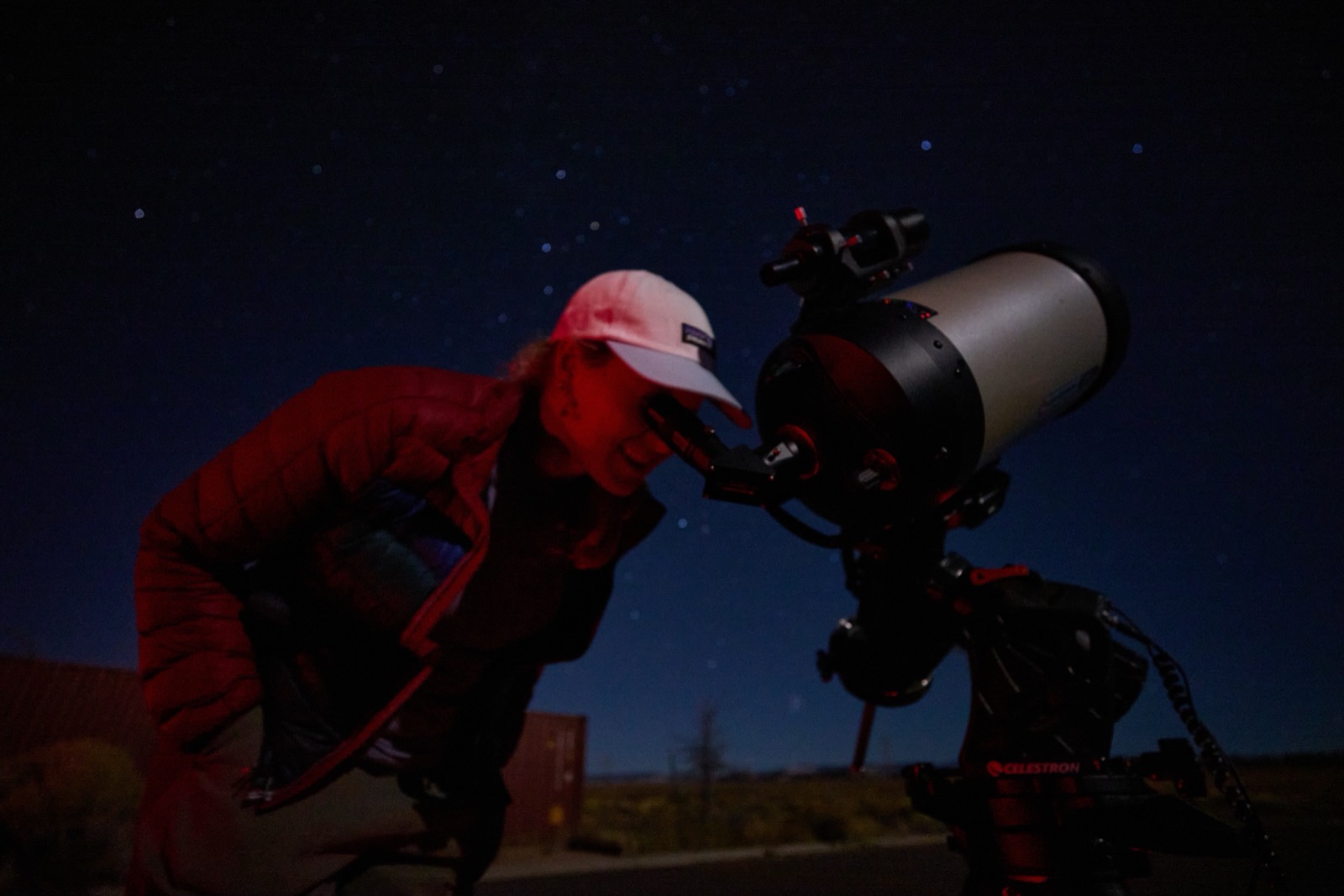
The one non-negotiable: something to hold the camera still
Every Milky Way photo, on any device, is a long exposure — seconds, not fractions of a second. Handholding is physically impossible at those durations. A small tripod is ideal; a beanbag, a jacket on a railing, or a phone propped against a rock works in a pinch. If you bring one piece of gear, make it a tripod. If you bring two, add a headlamp with a red mode so you can work without destroying your night vision (or your neighbors’).
Shooting with a phone
Modern phones are shockingly capable under a Bortle 1–2 sky:
- Use the dedicated night/astro mode. Recent iPhones engage Night mode automatically in the dark; when stabilized, they offer exposures up to about 30 seconds. Google Pixels have an explicit astrophotography mode (phone must be still for it to activate) that stacks roughly four minutes of frames. Recent Samsung and other Android flagships have equivalent long-exposure or “hyperlapse astro” modes.
- Stabilize, then use a timer. Prop or mount the phone, set a 3–10 second shutter delay, and do not touch it during the exposure.
- Aim at the core. Face south and frame the brightest part of the band — the viewpoint guide explains where the core sits over the amphitheater through the night.
- Turn the screen to minimum brightness and enable any red-light or night-shift mode. Your dark-adapted eyes are part of the experience you came for.
Expect a clearly visible band with star color and some core structure. It will not match a dedicated camera, but at Bryce a phone genuinely captures something most people’s home skies cannot show at all.
Baseline camera settings that just work
For any interchangeable-lens camera (mirrorless or DSLR), start here and adjust:
The starting recipe
- Lens: your widest — 14–24mm full-frame equivalent is ideal
- Aperture: wide open, f/2.8 if you have it (f/4 works; raise ISO one stop)
- Shutter: 15–20 seconds
- ISO: 3200 (try 1600 and 6400 either side)
- Focus: manual, on a bright star using magnified live view — autofocus will hunt and fail
- File: RAW, with a 2-second timer or remote release
- White balance: ~3800–4500K (free to change later if shooting RAW)
Why 15–20 seconds? Earth rotates, so stars trail in long exposures. A common rule of thumb (the “500 rule”) divides 500 by your full-frame-equivalent focal length: a 20mm lens gives 500 ÷ 20 = 25 seconds before trailing is obvious. Staying at 15–20 seconds keeps stars crisp on modern high-resolution sensors, which show trailing sooner than the old rule suggests.
Review your first frame, then adjust one variable at a time: histogram bunched hard left — raise ISO; stars are streaks — shorten the shutter; everything soft — refocus on a star, and check again after any lens bump.
Shoot under guidance, in the right place, at the right time
A guided night tour with Bryce Canyon Stargazing puts you at a dark-sky location at the right hour — ask about bringing your camera, and spend your setup time shooting instead of scouting.
Book a Night Tour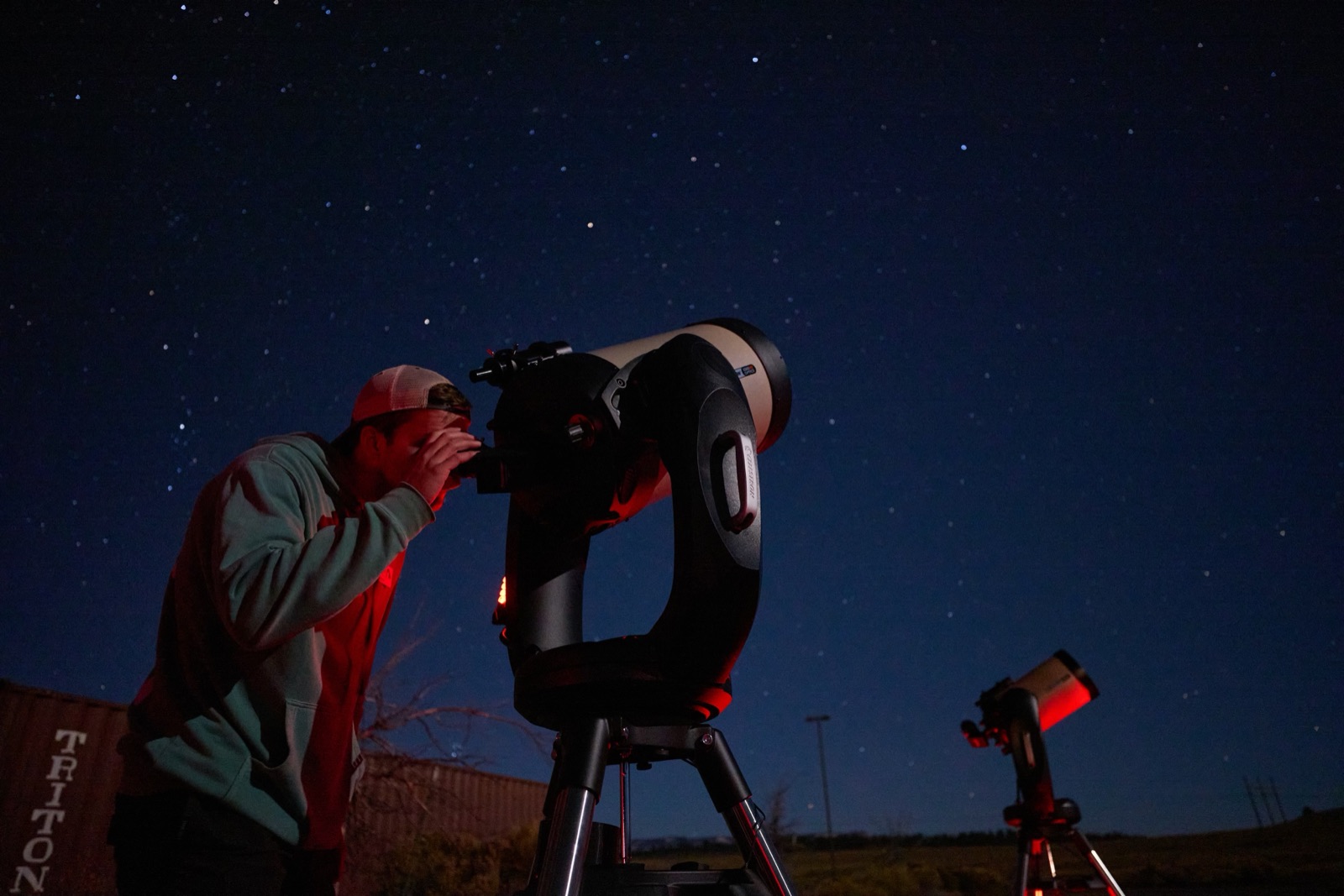
Timing and conditions do more than gear
The difference between a flat photo and a dramatic one at Bryce is rarely the camera:
- Moon first. Moonlight floods the frame the same way it floods your eyes. Shoot within the new-moon window or when the moon is below the horizon — dates and tactics in the moon phase guide.
- Season second. The core’s position changes by month: rising arch over the amphitheater in May–June evenings, high and vertical in July–August, leaning into the southwest by September–October. The season guide has the month-by-month table.
- Wait for full darkness. Astronomical twilight ends 80–100 minutes after sunset in summer. Shots taken before then fight residual skyglow on the southern horizon.
- Foreground makes the shot. A sky-only Milky Way photo could be from anywhere. Hoodoos silhouetted along the bottom of the frame say Bryce. Compose with the rim in daylight if you can.
Etiquette after dark
Night viewpoints are shared spaces full of dark-adapted eyes. Use red light only, point lights down, never shine a light into the amphitheater “for scale” while others are exposing, and announce yourself quietly when walking behind tripods. Headlights in the parking area are unavoidable — pause and let your eyes recover rather than burning a frame in frustration. More practical questions — cold, clouds, safety — are covered in the FAQ.
Your first Milky Way photo, this season
Pick a dark night, bring a tripod or just your phone, and let a local guide handle location and timing.
Reserve a Dark-Sky Night